
Group 5
Mathematics: Analysis and Approaches
Mathematics as an international language of its own: the course develops logical, critical and creative thinking and stresses connections to other fields of science.
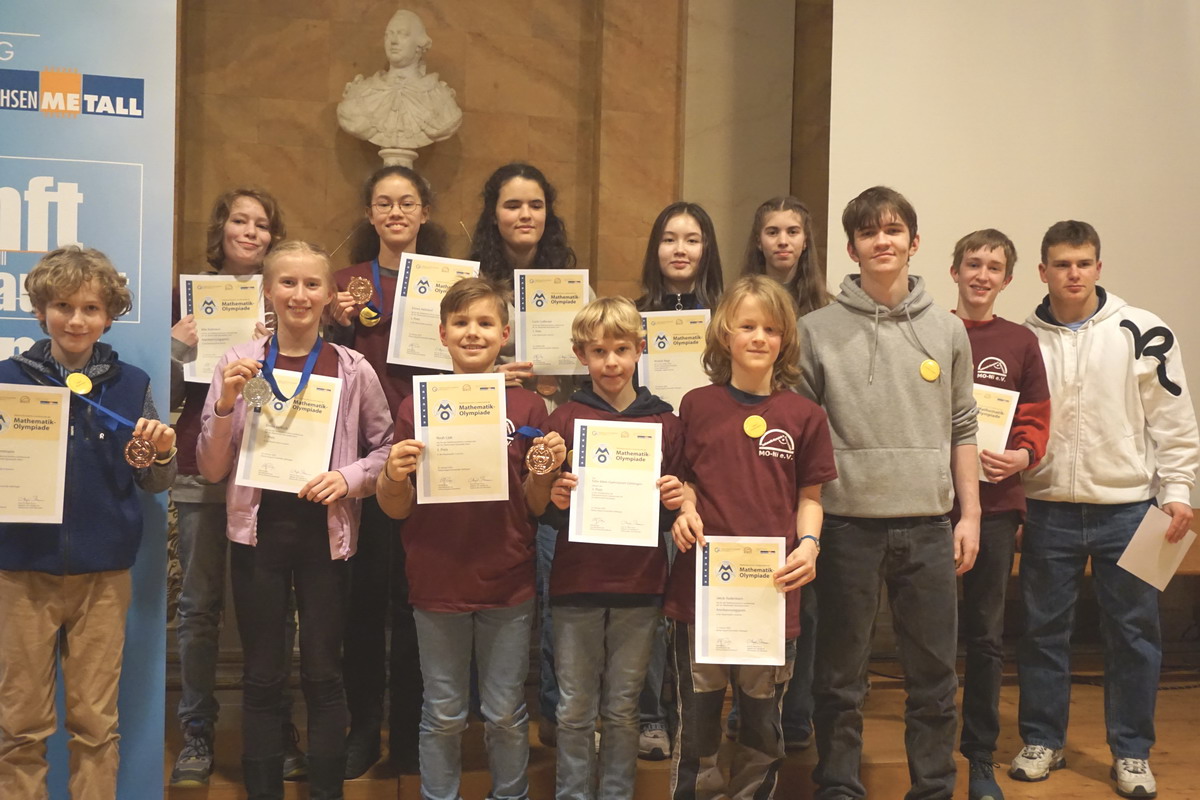
An international perspective on mathematics
In the history of mankind, mathematical ways of thinking and solving problems typically evolved as societies became more complex. Number systems and geometric figures were used to understand and explain phenomena in nature and human interaction – for example among the ancient Babylonians, Egyptians and Greeks. International cooperation developed early (e.g. Greek mathematicians working in Alexandria) and has intensified ever since; in most high-ranking universities a multicultural team of mathematicians can be found. This makes sense, since the mathematical approach to solving problems is rather independent of the spoken language, although a cultural touch can sometimes be noticed. Mathematicians have in fact built an international symbol system that can be seen as a language of its own, understood worldwide by insiders. This point of view is often emphasised in the course, supported by historical references. Although English is the language of instruction, comparisons of technical terms with other languages, especially German, can help enhance the international perspective of our students.
The course aims to help students develop logical, critical and creative thinking. They are trained to be patient and persistent in solving problems in a variety of contexts, to recognise links between different areas of mathematics and connections to other fields of science, to present their results and communicate clearly, to know and use correct mathematical notation and terminology, and to apply appropriate technological devices such as graphic display calculators (GDC). Short histories of mathematical pioneers and events are part of the lessons.
Recognition in Germany
The Kultusministerkonferenz (KMK), the official body representing the educational ministries of the 16 German states, recognises the value of both levels as valid university preparation. It has been confirmed by the KMK that IB graduates who study DP Mathematics SL will be able to access all subject areas of higher education in Germany. This arrangement is subject to all the standard requirements outlined in the KMK recognition agreement; in addition, students must complete the 16-hour module on vectors.